
Affiliate Marketing vs. Influencer Marketing: Which Drives More E-Commerce Revenue?
Affiliate marketing and influencer marketing are often mentioned in the same conversation, and it’s easy to see why. Both rely on people outside your business to promote your products and help you reach new customers. But that’s where the similarities end.
The biggest difference lies in how you pay. Influencers are typically paid upfront for creating content, regardless of the results. Affiliates, on the other hand, earn a commission only when they generate a sale or another predefined action. That difference can have a major impact on your marketing budget, risk, and return on investment.
So, which strategy is better for your ecommerce business?
The answer depends on your goals. If you’re looking to build brand awareness quickly, influencer marketing can be highly effective. If your priority is driving measurable sales with predictable customer acquisition costs, affiliate marketing often delivers stronger long-term value.
If you’re trying to decide between affiliate marketing and influencer marketing, don’t just compare follower counts or commission rates. Understanding how each model generates revenue will help you make a smarter investment.
What Is Affiliate Marketing?
Affiliate marketing is a performance-based marketing strategy where businesses partner with individuals or companies, known as affiliates, to promote their products or services. Instead of paying upfront for exposure, businesses only pay a commission when an affiliate generates a predefined action, such as a sale, lead, or subscription.
This model makes affiliate marketing one of the most cost-effective customer acquisition channels because every payout is tied to measurable results.
How Affiliate Marketing Works
The process is straightforward:
- A business creates an affiliate program.
- Affiliates join the program and receive a unique referral link or coupon code.
- They promote the products through blogs, YouTube, social media, email newsletters, or other channels.
- A customer clicks the affiliate link and completes a purchase.
- The affiliate platform tracks the referral and automatically credits the affiliate.
- The affiliate earns a commission based on the business’s commission structure.
The workflow looks like this:
Business
↓
Affiliate Promotes Product
↓
Customer Clicks Referral Link
↓
Purchase Is Made
↓
Affiliate Earns Commission
Why Ecommerce Brands Choose Affiliate Marketing
Affiliate marketing has become a popular growth strategy because it reduces financial risk while creating opportunities for long-term revenue.
Some of its biggest advantages include:
- You only pay for successful sales or qualified conversions.
- Customer acquisition costs remain predictable.
- Affiliates continue promoting your products over time.
- Every click, conversion, and commission can be tracked accurately.
- The program can scale by adding more affiliates without significantly increasing marketing costs.
What Is Influencer Marketing?

Influencer marketing is a strategy where businesses collaborate with content creators who have an established audience on platforms like Instagram, TikTok, YouTube, or Facebook. Instead of earning commissions for each sale, influencers are typically paid upfront to create and share content that promotes a product or brand.
The goal is usually to increase brand awareness, build credibility, and introduce products to new audiences. While influencer campaigns can generate sales, payment is generally based on content creation and audience reach rather than actual results.
How Influencer Marketing Works
A typical influencer campaign follows these steps:
- A brand partners with an influencer.
- The influencer creates sponsored content featuring the product.
- The content is shared with their audience.
- Followers visit the brand’s website or product page.
- Some viewers may become customers.
The process looks like this:
Brand
↓
Influencer Creates Content
↓
Audience Sees the Content
↓
Website Visits
↓
Potential Sales
Why Ecommerce Brands Use Influencer Marketing
Influencer marketing can be highly effective for businesses that want to increase visibility and build trust quickly.
Some of its key benefits include:
- Reach highly engaged audiences.
- Generate brand awareness in a short period.
- Build social proof through trusted creators.
- Launch new products to targeted communities.
- Create authentic content that can be reused across marketing channels.
Unlike affiliate marketing, however, influencer campaigns don’t guarantee sales. In most cases, brands pay for the collaboration whether or not it generates revenue, making it a higher-risk investment when sales are the primary goal.
Affiliate Marketing vs. Influencer Marketing: Quick Comparison
At a glance, affiliate marketing and influencer marketing may seem similar because both involve third parties promoting your products. The biggest difference is how success is measured and how partners get paid.
Affiliate marketing is built around performance. Affiliates earn a commission only when they generate a sale or another agreed-upon action. Influencer marketing typically works on a sponsorship model, where creators are paid to produce content regardless of how many sales it generates.
Here’s a side-by-side comparison.
| Feature | Affiliate Marketing | Influencer Marketing |
|---|---|---|
| Payment Model | Commission per sale or conversion | Upfront payment for content or campaign |
| Financial Risk | Lower, pay only for results | Higher, payment is made regardless of sales |
| ROI Tracking | Easy to measure | Can be more difficult to attribute |
| Cost Predictability | High | Varies by creator and campaign |
| Primary Goal | Drive sales and revenue | Increase brand awareness and engagement |
| Campaign Lifespan | Often long-term and ongoing | Usually short-term or campaign-based |
| Scalability | Easy to scale by adding affiliates | Limited by budget and creator availability |
| Best For | Performance-driven growth | Product launches and brand visibility |
Neither strategy is inherently better. If your goal is to maximize exposure and create buzz around a new product, influencer marketing can deliver excellent results. If your priority is generating measurable revenue with lower financial risk, affiliate marketing is often the stronger choice.
Looking for a performance-first growth strategy?
With HeldSway, you can launch an affiliate program where you reward partners only when they generate real results. Track referrals, automate commissions, and scale your program without paying upfront for every promotion.
Key Differences Between Affiliate Marketing and Influencer Marketing
While both strategies rely on third parties to promote your products, they operate very differently. Understanding these differences can help you choose the right approach for your marketing goals and budget.
1. Payment Model
The biggest difference is how partners are compensated.
With affiliate marketing, partners earn a commission only when they generate a sale or another agreed-upon action. If no conversions occur, the business doesn’t pay a commission.
With influencer marketing, brands typically pay creators upfront for sponsored content, regardless of the campaign’s performance. The payment covers the creator’s reach, content creation, and audience engagement rather than guaranteed results.
Winner: Affiliate marketing for businesses focused on measurable sales and predictable costs.
2. Financial Risk
Affiliate marketing carries relatively low financial risk because you’re paying for actual outcomes. Every commission is tied to a successful conversion, making it easier to manage customer acquisition costs.
Influencer marketing requires an upfront investment. Even if a campaign generates thousands of views, there’s no guarantee those views will turn into customers.
Winner: Affiliate marketing for risk-conscious businesses.
3. Measuring ROI
Affiliate marketing makes it easy to track performance. Every click, conversion, and commission can be attributed to a specific affiliate, giving businesses clear insights into what’s driving revenue.
Influencer marketing is often measured using metrics like reach, impressions, engagement, and website traffic. While these indicators are valuable, connecting them directly to sales can be more challenging unless advanced tracking tools or affiliate links are used.
Winner: Affiliate marketing for accurate attribution and ROI measurement.
4. Content Lifespan
Most influencer campaigns are tied to a specific post, video, or campaign. Once engagement slows, the content often generates fewer new customers.
Affiliate content is frequently evergreen. Blog articles, comparison guides, YouTube tutorials, and SEO-driven content can continue attracting visitors and generating sales months or even years after they’re published.
Winner: Affiliate marketing for long-term revenue potential.
5. Scalability
Growing an influencer program usually means negotiating with more creators, managing multiple campaigns, and increasing your marketing budget.
Affiliate programs are easier to scale because new partners can join, receive referral links, and start promoting your products without requiring individual sponsorship agreements.
Winner: Affiliate marketing for businesses planning to grow their partner network.
The takeaway: Influencer marketing is excellent for creating awareness and generating buzz, while affiliate marketing is designed to deliver measurable, performance-based results. For many ecommerce brands, affiliate marketing provides a more scalable and cost-effective path to long-term growth.
Pros and Cons of Affiliate Marketing vs. Influencer Marketing

Both affiliate marketing and influencer marketing can help grow an ecommerce business, but they solve different problems. Understanding the strengths and limitations of each approach will help you invest your marketing budget more effectively.
Affiliate Marketing
Pros
- Pay only for results. Affiliates earn commissions only when they generate sales or other agreed-upon actions, reducing financial risk.
- Easy to measure ROI. Every click, conversion, and commission can be tracked, making it simple to calculate return on investment.
- Scales efficiently. You can grow your affiliate program by recruiting more partners without dramatically increasing your marketing budget.
- Long-term revenue potential. Affiliates often create evergreen content that continues driving traffic and sales long after it’s published.
- Predictable customer acquisition costs. Commission rates are predefined, making it easier to forecast marketing expenses.
Cons
- Building a successful affiliate program takes time.
- Recruiting and supporting quality affiliates requires ongoing effort.
- Strong tracking and affiliate management software are essential.
Influencer Marketing
Pros
- Builds brand awareness quickly. Influencers can introduce your products to thousands or even millions of potential customers in a short period.
- Creates social proof. Recommendations from trusted creators often increase credibility and consumer confidence.
- Excellent for product launches. Influencer campaigns can generate excitement around new products or seasonal promotions.
- Produces valuable content. Brands can often repurpose influencer-created photos and videos across other marketing channels.
Cons
- Upfront payments don’t guarantee sales.
- Measuring direct revenue can be difficult.
- Campaign performance often depends on a creator’s audience and engagement quality.
- Results are typically short-term unless campaigns are repeated.
Which One Offers Better Value?
If your goal is to increase brand awareness, influencer marketing can be a smart investment. But if your priority is generating measurable sales while keeping customer acquisition costs under control, affiliate marketing usually provides stronger long-term value.
That’s why many ecommerce businesses are investing more heavily in affiliate programs. With platforms like HeldSway, you can recruit affiliates, track every referral, automate commission payouts, and only pay when your partners generate real results.
Which Drives More E-Commerce Revenue?

There’s no single answer because affiliate marketing and influencer marketing are designed to achieve different objectives. One focuses on generating measurable sales, while the other is often used to build awareness and reach new audiences.
If your primary goal is revenue, affiliate marketing generally has the advantage.
Affiliate Marketing Delivers Performance-Based Revenue
Affiliate marketing rewards partners only when they produce results. Whether the commission is based on a sale, lead, or subscription, every payment is tied to a measurable outcome.
This model offers several advantages:
- Lower customer acquisition risk
- Predictable marketing costs
- Clear ROI tracking
- Long-term revenue from evergreen content
- Easy optimization based on performance
As your affiliate network grows, you can continue increasing sales without significantly increasing your fixed marketing budget.
Influencer Marketing Excels at Brand Awareness
Influencer marketing can generate a surge of attention, especially during product launches or seasonal campaigns. A single post from the right creator can introduce your brand to thousands of potential customers.
However, visibility doesn’t always translate into revenue. Since brands typically pay influencers upfront, the financial return depends on how well the campaign performs after it’s published.
For businesses focused on awareness, influencer marketing can be highly effective. For those focused on sales, the results are often less predictable.
A Simple Cost Comparison
Imagine you have a $2,000 marketing budget.
With influencer marketing, you might spend the entire budget on one or two sponsored campaigns. Whether those campaigns generate 20 sales or 200, the cost remains the same.
With affiliate marketing, you only pay commissions after sales occur. If no sales are generated, you don’t owe commissions. If affiliates drive significant revenue, your payouts increase because your business is growing, not because you’re paying for exposure.
The Best Strategy for Long-Term Growth
For many ecommerce brands, affiliate marketing becomes a sustainable revenue channel because partners continue promoting products through blogs, review sites, YouTube videos, newsletters, and social media long after they join the program.
Influencer campaigns often have a shorter lifespan, while affiliate content can keep generating traffic and sales for months or even years.
Looking for predictable, performance-based growth?
With HeldSway, you can build an affiliate program that rewards partners only when they generate results. Recruit affiliates, track every referral, automate commission payouts, and turn partnerships into a long-term revenue channel.
When Affiliate Marketing Is the Better Choice

While both strategies have their place, affiliate marketing is often the better option for ecommerce brands that want predictable growth and measurable results. Because affiliates are rewarded based on performance, businesses can scale their marketing efforts without taking on the financial risk of paying for campaigns that may not convert.
Here are some situations where affiliate marketing has the advantage.
You Want to Pay for Results, Not Promises
If controlling customer acquisition costs is a priority, affiliate marketing is the safer choice. Instead of paying creators upfront, you only pay commissions after a sale or another agreed-upon action is completed.
You Need Measurable ROI
Affiliate marketing makes it easy to see which partners are driving clicks, conversions, and revenue. This level of visibility allows you to optimize your program and invest more in affiliates who consistently perform well.
You’re Building a Long-Term Growth Channel
Many affiliates create evergreen content, such as product reviews, buying guides, comparison articles, and tutorial videos. These assets can continue attracting potential customers and generating sales long after they’re published.
You Want to Scale Efficiently
Adding more affiliates doesn’t necessarily mean increasing your marketing budget upfront. As your partner network grows, your business can generate more revenue while keeping costs tied directly to performance.
You Need Predictable Marketing Costs
Commission rates are set in advance, making it easier to forecast expenses and maintain healthy profit margins. This is especially valuable for growing ecommerce brands that need tighter control over their budgets.
When Influencer Marketing Is the Better Choice

Affiliate marketing isn’t always the right answer. If your goal is to generate buzz, reach a new audience quickly, or create engaging content around your products, influencer marketing can be the stronger option.
Here are a few situations where influencer marketing makes the most sense.
You’re Launching a New Product
Launching something new often requires visibility before sales. Influencers can introduce your product to thousands of potential customers in a short period, helping you create awareness and build early momentum.
Brand Awareness Is Your Top Priority
If people don’t know your brand exists, driving sales becomes much harder. Influencer marketing helps put your products in front of relevant audiences and can significantly increase brand recognition.
Your Products Are Highly Visual
Fashion, beauty, fitness, home décor, food, and lifestyle brands often benefit from seeing products in real-world use. Influencers create authentic photos and videos that help potential customers imagine using the product themselves.
You Want User-Generated Content
Influencer partnerships don’t just generate exposure. They also produce valuable content that can be repurposed across your website, email campaigns, paid ads, and social media channels.
You’re Running a Short-Term Campaign
If you’re promoting a seasonal sale, limited-time offer, or holiday collection, influencer marketing can deliver immediate exposure within a defined campaign window.
The best strategy isn’t always choosing one over the other. Many successful ecommerce brands use influencers to generate awareness and then invite those creators to join their affiliate program. This combines the reach of influencer marketing with the performance-based benefits of affiliate marketing, creating a sustainable growth strategy.
Why the Smartest Ecommerce Brands Use Both
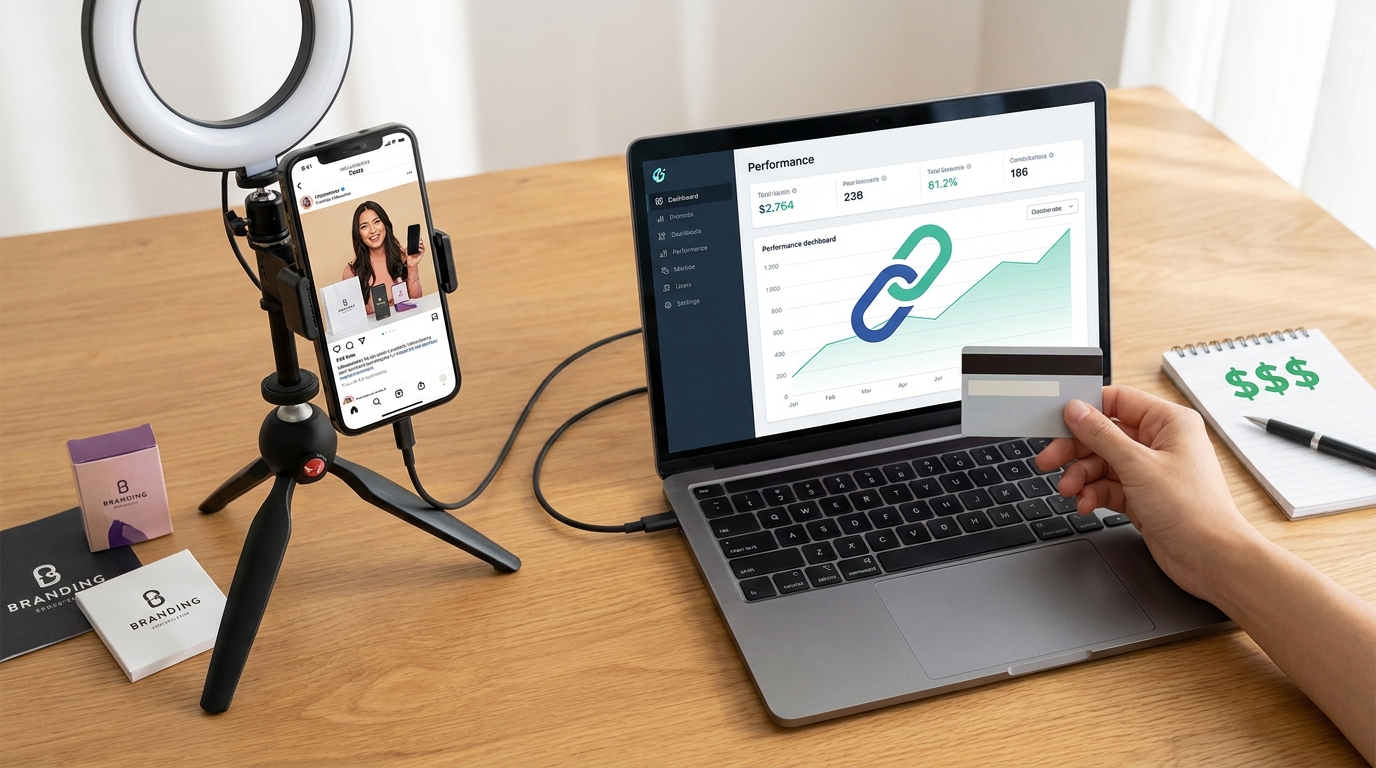
Affiliate marketing and influencer marketing aren’t competing strategies. In many cases, they work better together than they do on their own.
Influencer marketing is great for introducing your brand to new audiences and creating excitement around your products. Affiliate marketing takes that interest and turns it into a measurable, long-term revenue channel.
Think of it like this:
Influencer Marketing
Creates awareness and builds trust
↓
Affiliate Marketing
Rewards partners for driving sales
↓
Sustainable Revenue Growth
A common approach is to start by partnering with influencers for sponsored content, then invite the creators who perform well to join your affiliate program. Instead of paying them upfront for every future campaign, they continue earning commissions whenever they generate sales.
This hybrid model gives businesses the best of both worlds:
- Build brand awareness through influencers.
- Create long-term partnerships with top-performing creators.
- Reduce upfront marketing costs over time.
- Generate recurring, performance-based revenue.
- Measure results more accurately.
Many of today’s most successful ecommerce brands don’t ask whether affiliate marketing or influencer marketing is better. They use each strategy where it delivers the greatest impact.
How HeldSway Helps You Build a Performance-Based Affiliate Program
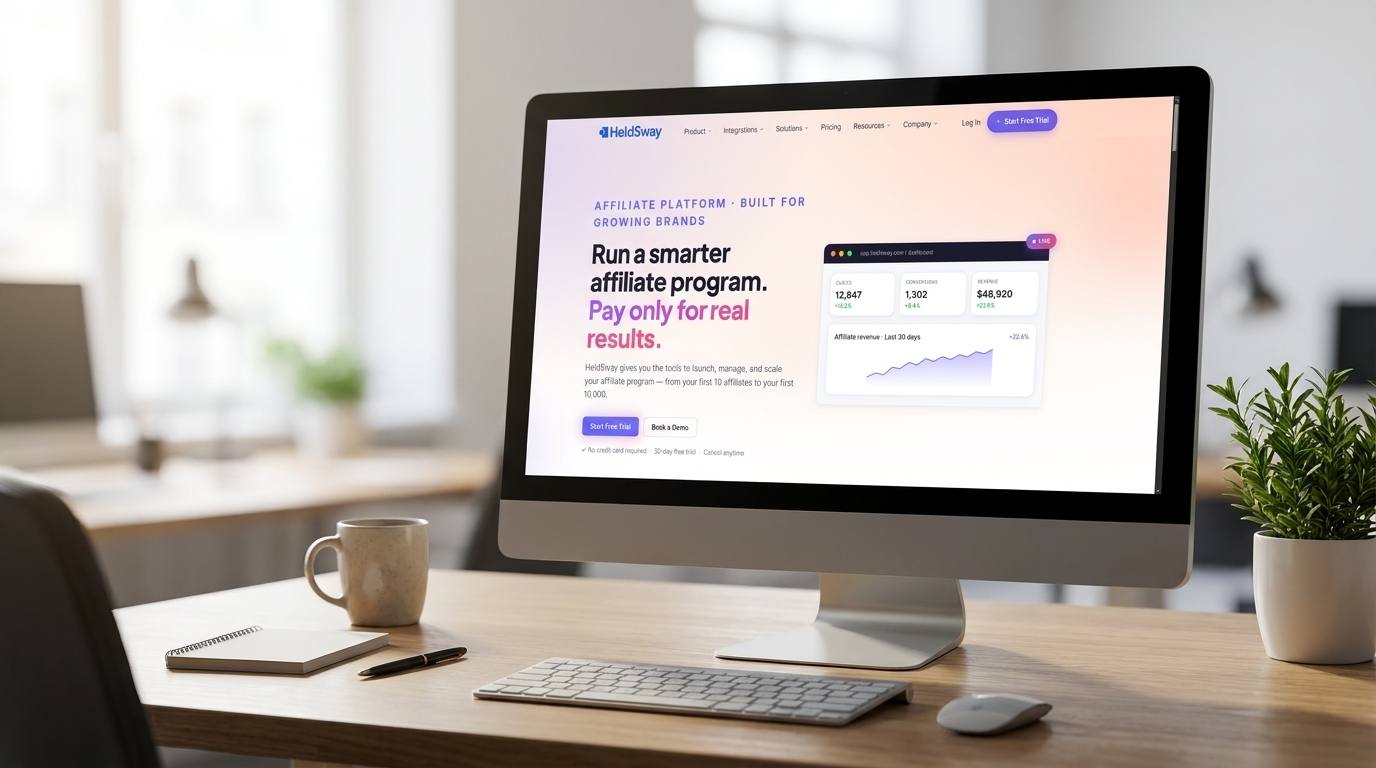
If affiliate marketing sounds like the right fit for your business, the next step is choosing software that makes it easy to launch, manage, and scale your program. That’s where HeldSway comes in.
HeldSway is built for ecommerce brands that want to grow through partnerships without adding unnecessary complexity. From recruiting affiliates to tracking referrals and automating payouts, everything is managed from a single platform.
Accurate Affiliate Tracking
HeldSway tracks every referral with reliable, cross-device attribution, ensuring affiliates receive credit for the sales they generate while giving you a clear view of campaign performance.
Flexible Commission Structures
Every business is different. HeldSway supports fixed, percentage-based, recurring, and lifetime commissions, so you can build a program that matches your pricing model and growth strategy.
Branded Affiliate Portal
Create a professional experience with a custom-branded affiliate portal that uses your own domain and logo. Your partners stay connected to your brand throughout their journey.
Automated Payouts
Forget spreadsheets and manual payment processing. HeldSway supports automated PayPal and ACH payouts, making it easier to reward affiliates accurately and on time.
Real-Time Reporting
Monitor clicks, conversions, commissions, and top-performing affiliates from a centralized dashboard. Having access to real-time insights helps you identify what’s working and optimize your program as it grows.
Built to Scale
Whether you’re working with 20 affiliates or 2,000, HeldSway provides the tools to grow your program without increasing your administrative workload.
Ready to build a performance-based affiliate program?
With HeldSway, you can recruit affiliates, track every referral, automate payouts, and only pay commissions when your partners generate real revenue.
Conclusion
Affiliate marketing and influencer marketing both have a place in a successful ecommerce strategy, but they solve different challenges. Influencer marketing is excellent for building awareness, creating social proof, and generating excitement around new products. Affiliate marketing focuses on driving measurable sales while keeping customer acquisition costs tied to actual results.
For many ecommerce brands, the smartest approach isn’t choosing one over the other. It’s using influencer marketing to expand your reach and affiliate marketing to turn that attention into long-term, performance-based revenue.
If you’re ready to build an affiliate program that rewards partners for real results, HeldSway gives you everything you need to get started. With cross-device tracking, flexible commission structures, branded affiliate portals, automated PayPal and ACH payouts, and real-time reporting, you can grow your affiliate program with confidence while only paying for the sales your partners generate.
Frequently Asked Questions
What is the difference between affiliate marketing and influencer marketing?
Affiliate marketing pays partners a commission only when they generate a sale or another agreed-upon action. Influencer marketing typically involves paying creators upfront to produce sponsored content, regardless of how many sales it generates.
Is affiliate marketing better than influencer marketing?
It depends on your goals. If your priority is brand awareness and reaching new audiences quickly, influencer marketing can be highly effective. If you're focused on measurable sales and predictable ROI, affiliate marketing is usually the better choice.
Can influencers become affiliates?
Yes. Many brands combine both strategies by paying influencers for an initial campaign and then inviting them to join their affiliate program. This allows creators to continue earning commissions for future sales they generate.
Which strategy has the better ROI?
Affiliate marketing generally offers more predictable ROI because businesses only pay for successful conversions. Influencer marketing can deliver strong returns, but results vary depending on the creator, audience, and campaign.
Should ecommerce brands use affiliate marketing or influencer marketing?
Many successful ecommerce brands use both. Influencers help build awareness and credibility, while affiliate programs create an ongoing, performance-based revenue channel.
Do I need affiliate software to run an affiliate program?
While it's possible to manage affiliates manually, dedicated affiliate software makes the process much easier. Platforms like HeldSway automate referral tracking, commission calculations, payouts, and reporting, allowing you to scale your program more efficiently.